
Chart of Accounts Example Format Structured Template Definition
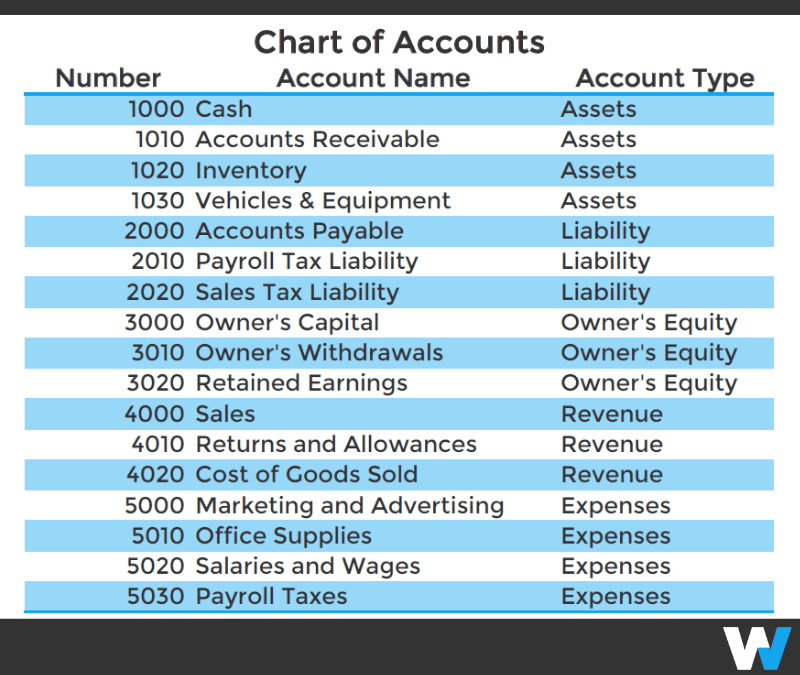
Today, the chart of accounts is an integral element of accounting software, and its use is widespread across various industries and organizations. As mentioned, all accounts in the COA are typically arranged in a hierarchical order for easy navigation and reporting. It often follows a pattern where the first digit represents the major category, and subsequent digits provide more detail.
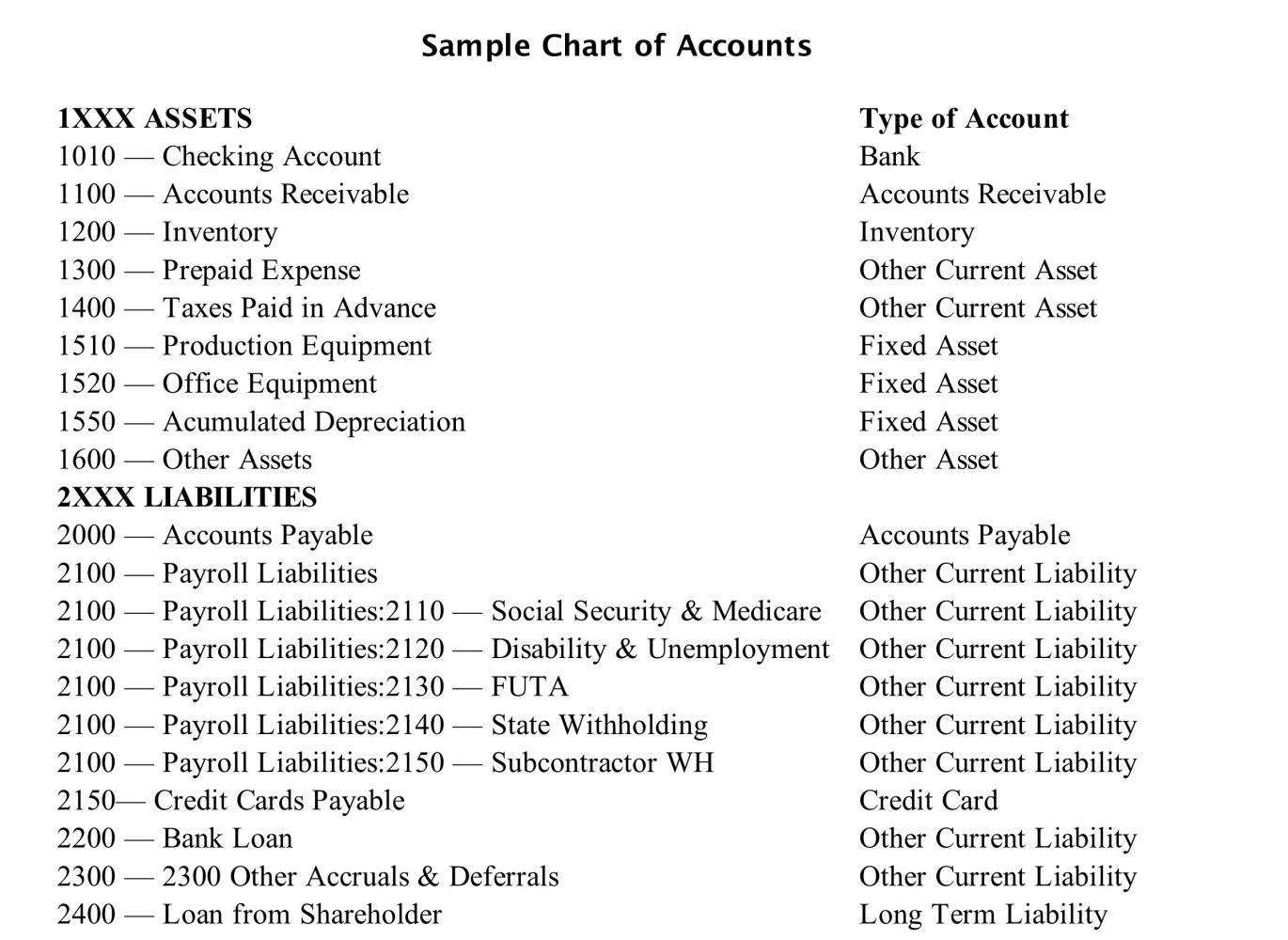
Where to look for liabilities in reports?
Just remember that while you can add an account to the chart at any time throughout the financial year, you should not delete any accounts until the end of an accounting period. For example, companies in the United States must have certain accounts in place to comply with the tax reporting requirements of the IRS (Internal Revenue Service). One of the IRS stipulations is that expenses like travel and entertainment should be tracked in individual accounts. A chart of accounts is a list of all accounts used by a company in its accounting system. Your chart of accounts is a living document for your business, meaning, over time, accounts will inevitably need to be added or removed.
Best Practices for an Effective COA
Debiting increases certain accounts’ balances and decreases others while crediting has the opposite effect. We’ll start with accounts, as they form the basis for the chart of accounts. If you’re an accounting professional, you don’t have any trouble understanding what accounts mean in accounting. However, less finance-savvy people might confuse them with actual bank accounts. Next, I’ll show you how the chart of accounts is a part of the financial statement building process. Below, I explain what a chart of accounts is and how you will use it in bookkeeping and accounting.
Equity Accounts:
This sample chart of accounts structure allows the business to easily identify accounts and account codes enabling transactions to be posted and the trial balance and financial statements to be prepared. Before diving into creating a Chart of Accounts, it’s crucial to understand the specific needs and nature of your business. Consider the industry, size, complexity, and unique financial reporting requirements. Tailoring the Chart of Accounts to your business’s operations ensures it effectively captures and categorizes all relevant financial transactions. Have you ever thought about how businesses handle their accounts and finances efficiently? How do they organize a myriad of financial transactions and make sense of it all?
All Categories
This is crucial for providing investors and other stakeholders a bird’s-eye view of a company’s financial data. Your accounting software should come with a standard COA, but it’s up to you and your bookkeeper or accountant to keep it organized. Here are tips for how to do this, plus details about what a COA is, examples of a COA and more.
Most new owners start with one or two broad categories, like sales and services, it may make sense to create seperate line items in your chart of accounts for different types of income. This is because while some types of income are easy and cheap to generate, others require considerable effort, time, and expense. The COA is typically set up to display information in the order that it appears in financial statements. That means that balance sheet accounts are listed first and are followed by accounts in the income statement. Say you have a checking account, a savings account, and a certificate of deposit (CD) at the same bank. When you log in to your account online, you’ll typically go to an overview page that shows the balance in each account.
Opt for systems that allow easy mapping of COA accounts and provide customizable options to align with specific business needs. Equity accounts reflect the residual interest or ownership in a business after deducting liabilities from assets. Common equity accounts include owner’s equity, retained earnings, and capital contributions. Equity accounts signify the ownership stake and measure a company’s net worth.
Our goal is to deliver the most understandable and comprehensive explanations of financial topics using simple writing complemented by helpful graphics and animation videos. At Finance Strategists, we partner with financial experts to ensure the accuracy of our financial content. In order to keep the number of accounts down to a manageable level, you may periodically review the list and close any accounts that are not fully utilized.
Make sure that your line items have titles that make sense to you and your accountant, so use straightforward titles like ‘bank fees’, or ‘bottling equipment’. Current liabilities are classified as any outstanding payments that are due within the year, while non-current or long-term liabilities are payments due more than a year from the date of the report. We believe everyone should be able to make financial decisions with confidence. Current liabilities are any outstanding payments that are due within the year, while non-current or long-term liabilities are payments due more than a year from the date of the report. Shaun Conrad is a Certified Public Accountant and CPA exam expert with a passion for teaching. After almost a decade of experience in public accounting, he created MyAccountingCourse.com to help people learn accounting & finance, pass the CPA exam, and start their career.
Expenses are subtracted from revenue to calculate net income – the company’s profit or loss in the period in question. Equity is the ownership value in a company, determined by subtracting liabilities from assets. In simple terms, it’s what retail marketing guide to email marketing you have in the business as a company owner (or one of the company owners) or, often, an investor. Consider integrating it with all your sales sources and payment systems to create a single source of truth about your business finances.
- Expense accounts are essential in assessing a company’s cost structure and profitability.
- When speaking of revenue, we usually mean the income a company earns from its primary business activities, such as selling goods or providing services.
- This chart of accounts example includes a variety of common account types and their typical numbering.
- This timely access to information aids in informed decision-making and allows for quick adjustments based on current financial insights.
- It’s a fundamental accounting framework you use to organize your financial records and build reporting around.
- One of the IRS stipulations is that expenses like travel and entertainment should be tracked in individual accounts.
So, separating these additional accounts allows businesses to understand the specific drivers of their financial performance in more detail. Operating expenses are the costs needed to run a business day-to-day, for example, rent and salaries. Non-operating expenses are not that directly tied to running the business.
This entry was posted on Wednesday, March 3rd, 2021 at 1:37 pm
You can follow any responses to this entry through the RSS 2.0 feed.